Core Functionality
The following Core Functionality enable the automation and digitalisation of procurement processes
Incorporates Compreshensive Bid Management with Functional Committee Management and Scoring
Feature Details
The SupplyFlow utilises the core features to cater for the full range of procurement procedures and processes
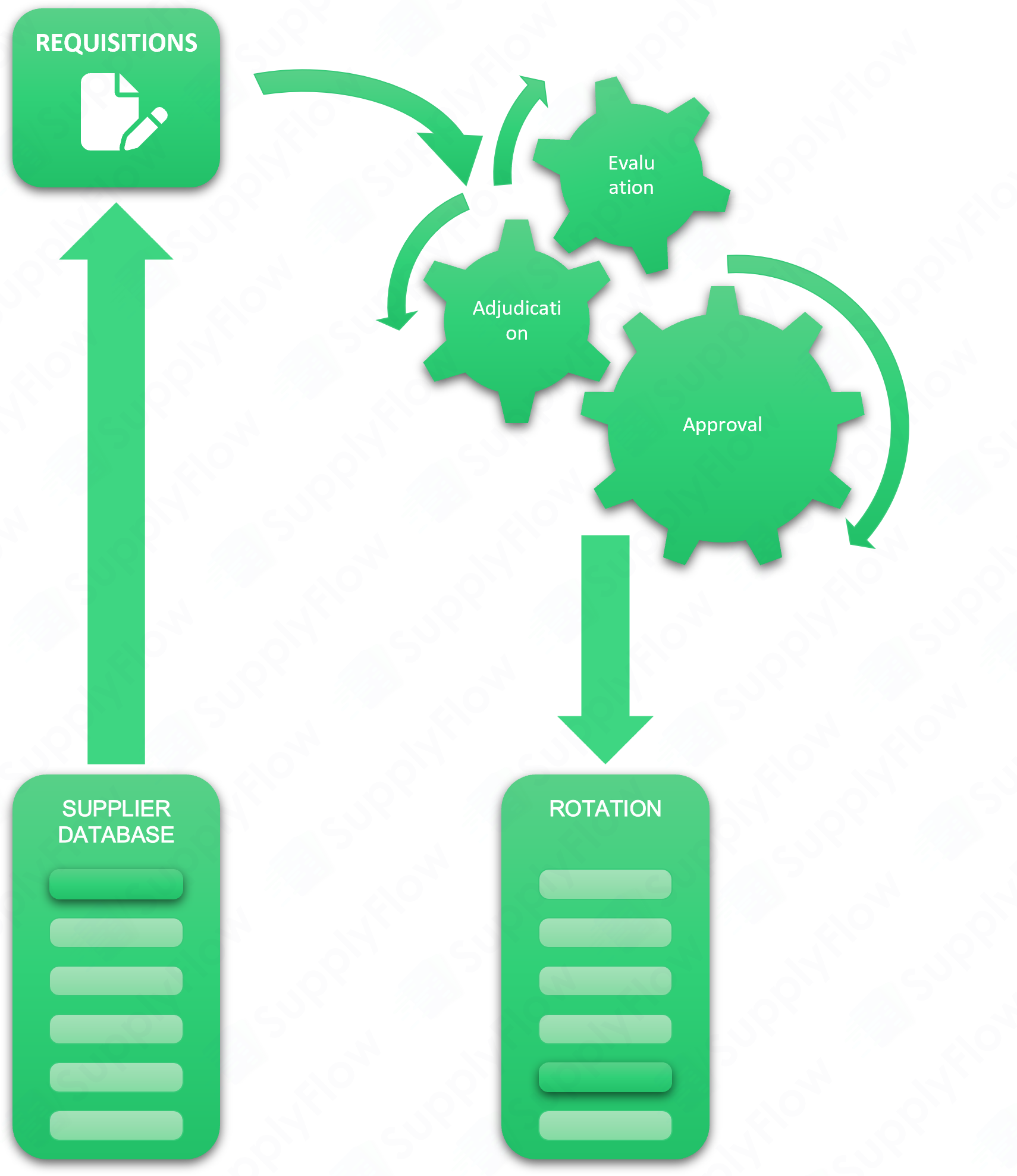
Requisitioning and E@siTrack Facility
This process includes the identification, creation and approval of a requisition. The approval of the requisition requires two key decision-making criteria, namely, verifying the authenticity of the need and availability of the funds. This includes the release of the initial requisition by Line Mangers and the Final Release prior to appointment.
Learn more about Requisitioning
The E@siTrack Facility allows the end user visibility to their requisitions so that they can track the entire procurement process.
Procurement Planning
If the SupplyFlow Requisitioning premium module is implemented, Requisitioners / End Users can capture and submit annual Procurement requirements to SCM.
The SCM department can then convert these end user requirements into Procurement Plans for the financial year. The SCM users can also capture Procurement Plans and submit for approval, if the SupplyFlow Requisitioning premium module is not implemented. On Approval of the Procurement Plans, reports can
be generated, together with ongoing actuals vs the approved Procurement Plan. These plans also have all the required information for submission to National Treasury if required.
Creating or converting to an Acquisition
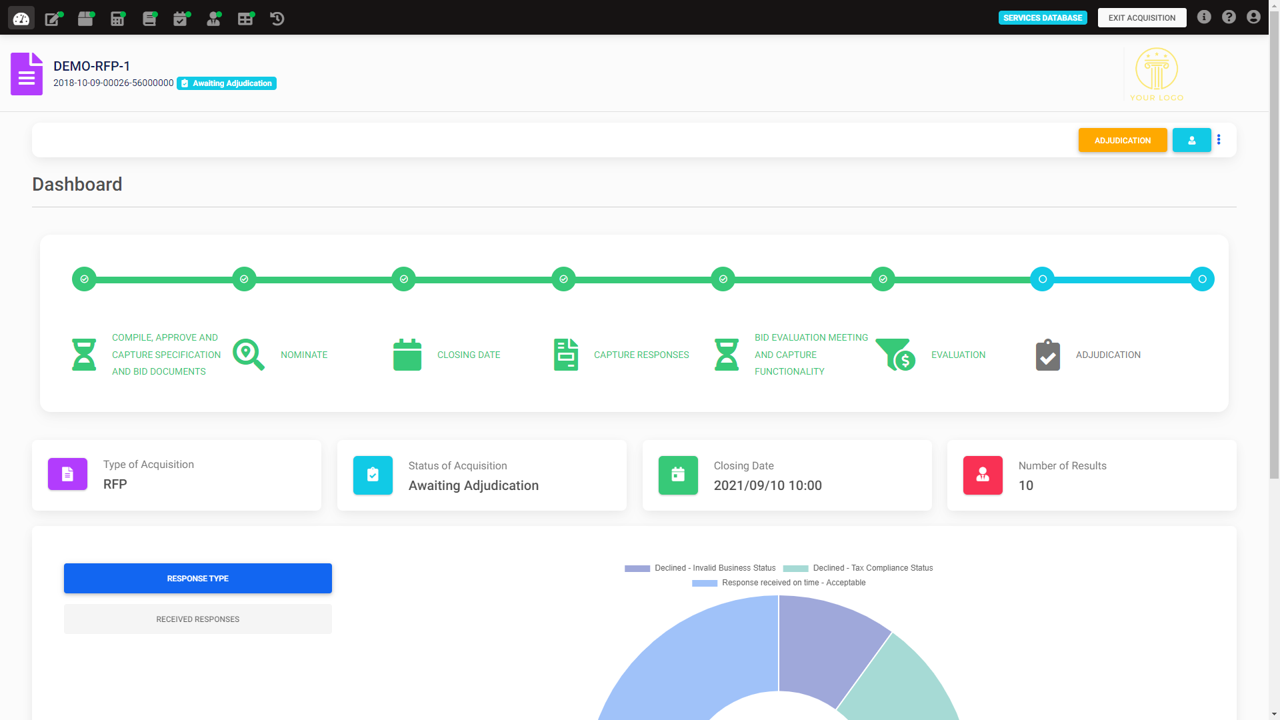
The system allows for the conversion of a requisition into an acquisition, where the requisitioning module has been implemented. Or, alternatively, an acquisition can be created directly on the system. The critical aspect of the creation of or conversion to an acquisition is the determining of the type of acquisition. The system can control the closing dates for an acquisition, mange virtual, onsite or hybrid briefing sessions and collate custom information that may be required.
State-of-the-Art Search Engine and Rotation
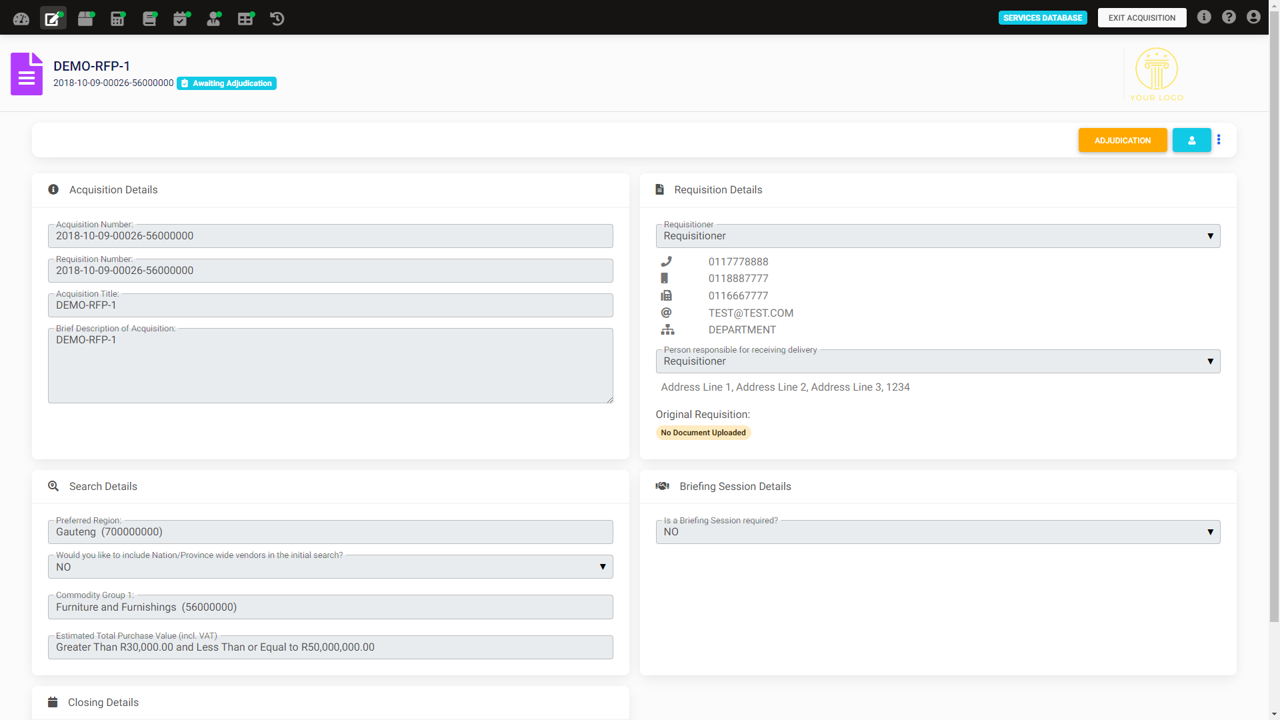
Allows for the selection of suppliers depending on the type of acquisition and incorporates the ability to spatially (location based) search, ensuring adherence to specified criteria whilst ensuring minimum competitiveness and considering tax compliance status, CSD and other legislative compliance.
Allows for the automatic Invitation of nominated suppliers that is configurable and incorporates required Standing Bidding Documents
This
technology allows for the rotation of suppliers with accelerated opportunities (through an Automatic formula-driven rotation based on South African National Standards (SANS 10396) formula) to categorized suppliers, such as BBBEE, and that is fully tracked and auditable.
Invitation of nominated suppliers that is configurable and incorporates required Standing Bidding Documents This technology allows for the rotation of suppliers with accelerated opportunities (through an Automatic formula-driven rotation based on South African National Standards (SANS 10396) formula) to categorized suppliers, such as BBBEE, and that is fully tracked and auditable.
Bid Response Administration with Electronic Bid (RFx) Submission
Supplier responses can be captured on the system. Various types of responses can be configured on the system. For valid responses, the quotation, relevant documents, SBD information and BEE information can be captured. The facility also includes Electronic Bid (RFx) Submission directly from suppliers.
Learn more about the Supplier Portal
Bid Evaluation
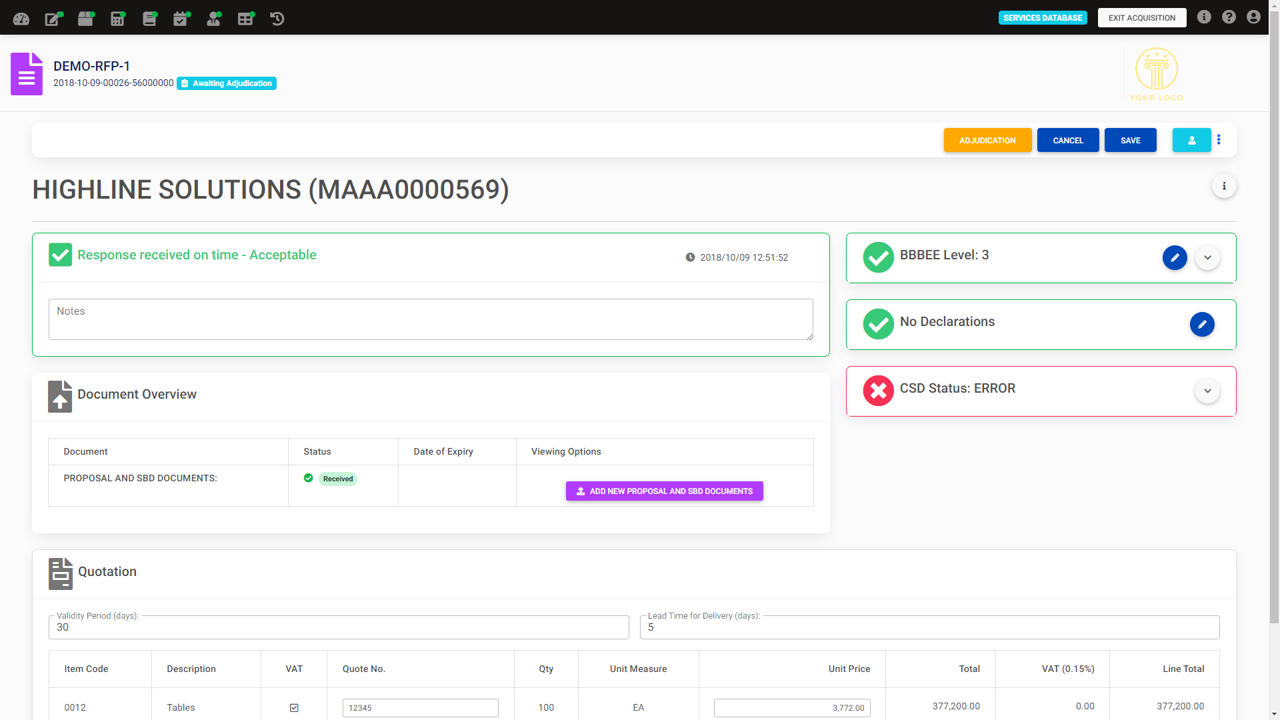
Evaluation of acquisitions using our Evaluation Criteria methodology as illustrated below: -
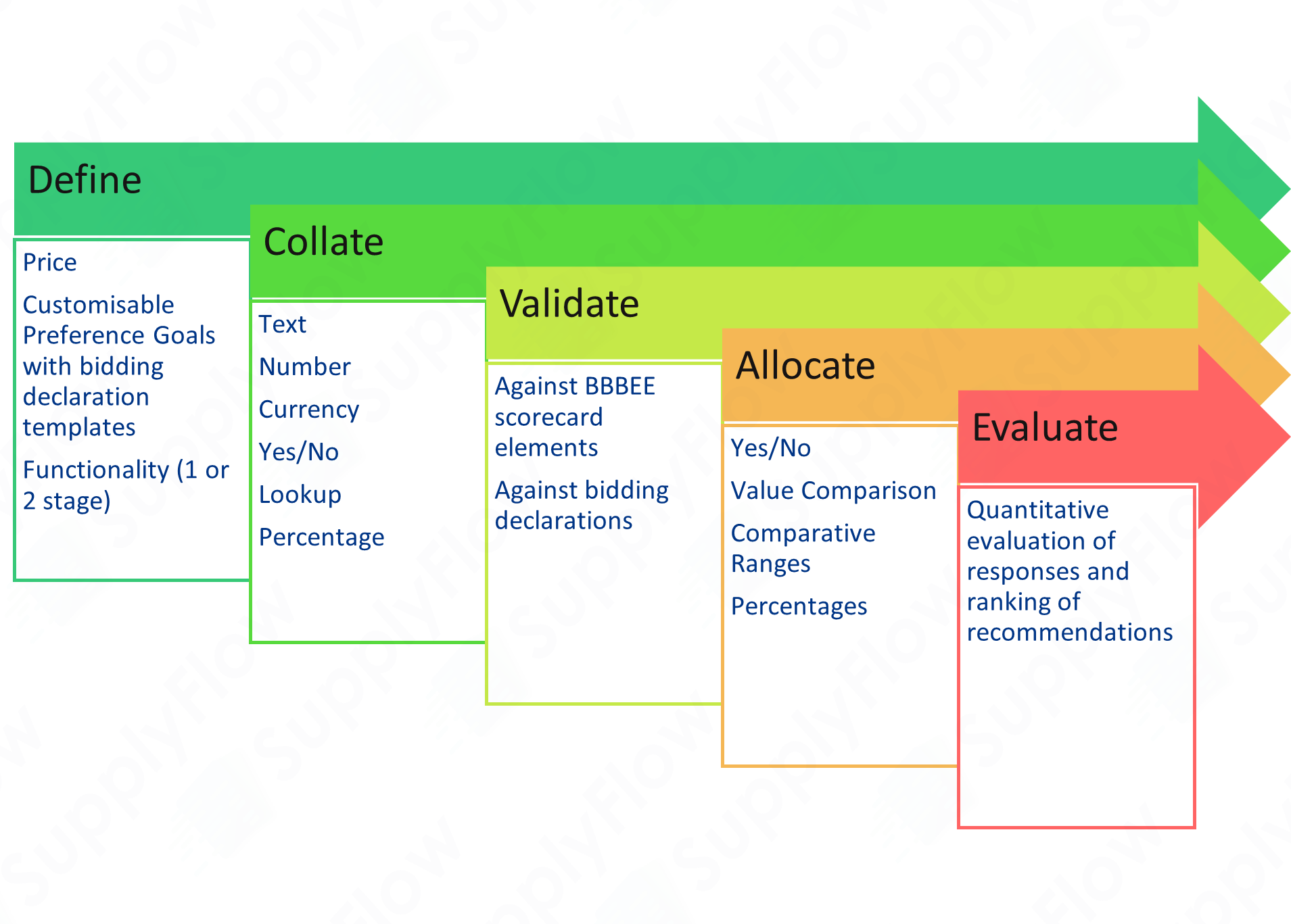
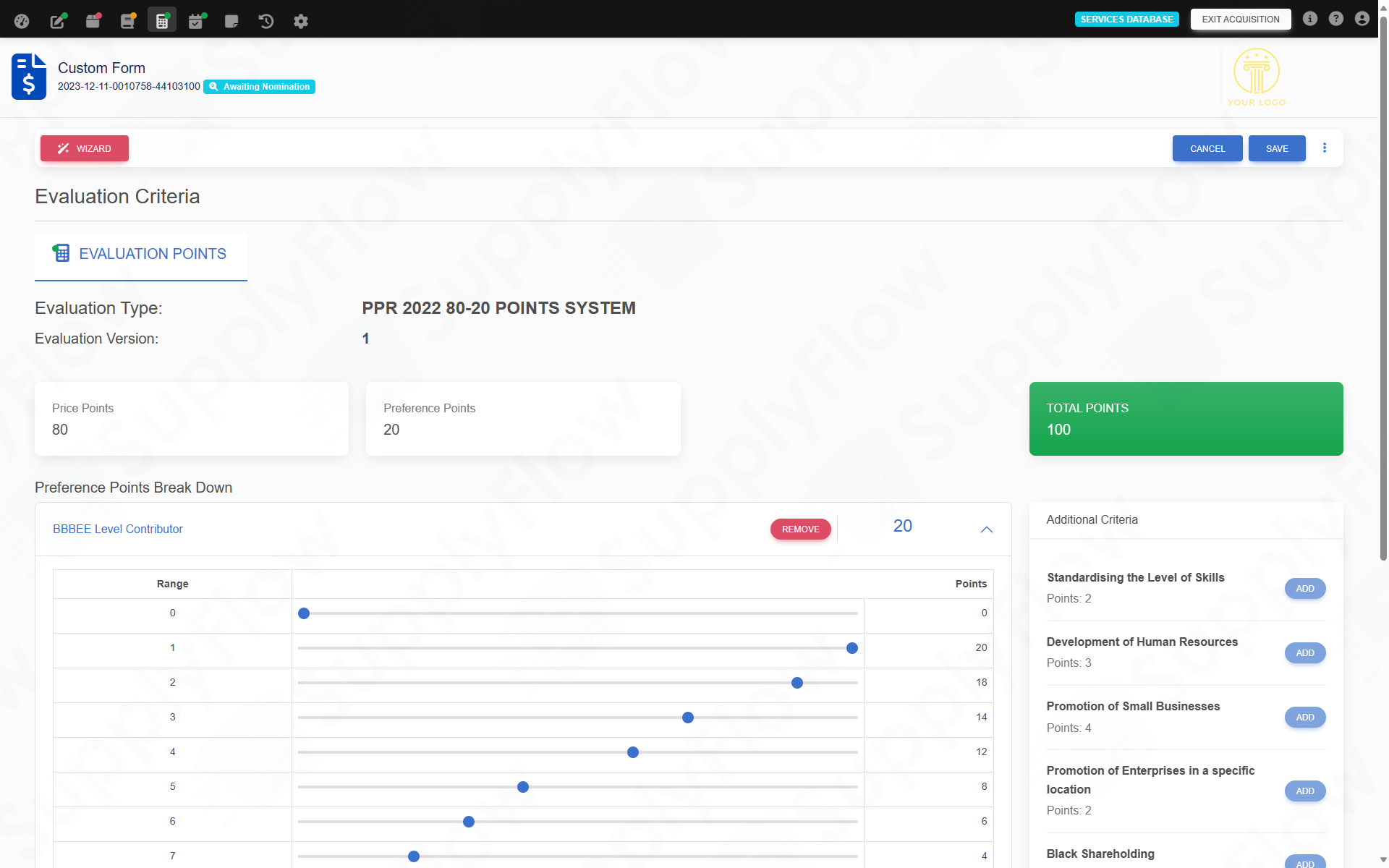
This methodology caters for the quantitative evaluation of responses and ranking of recommendations for most organisations. It also allow the solution to incorporate Preferential Procurement Regulation that allows for the Stipulation of Evaluation Criteria per acquisition (80-20 and 90-10 points system), Complete functional scoring per committee member is available with the automatic calculation of Price and Preference scores.
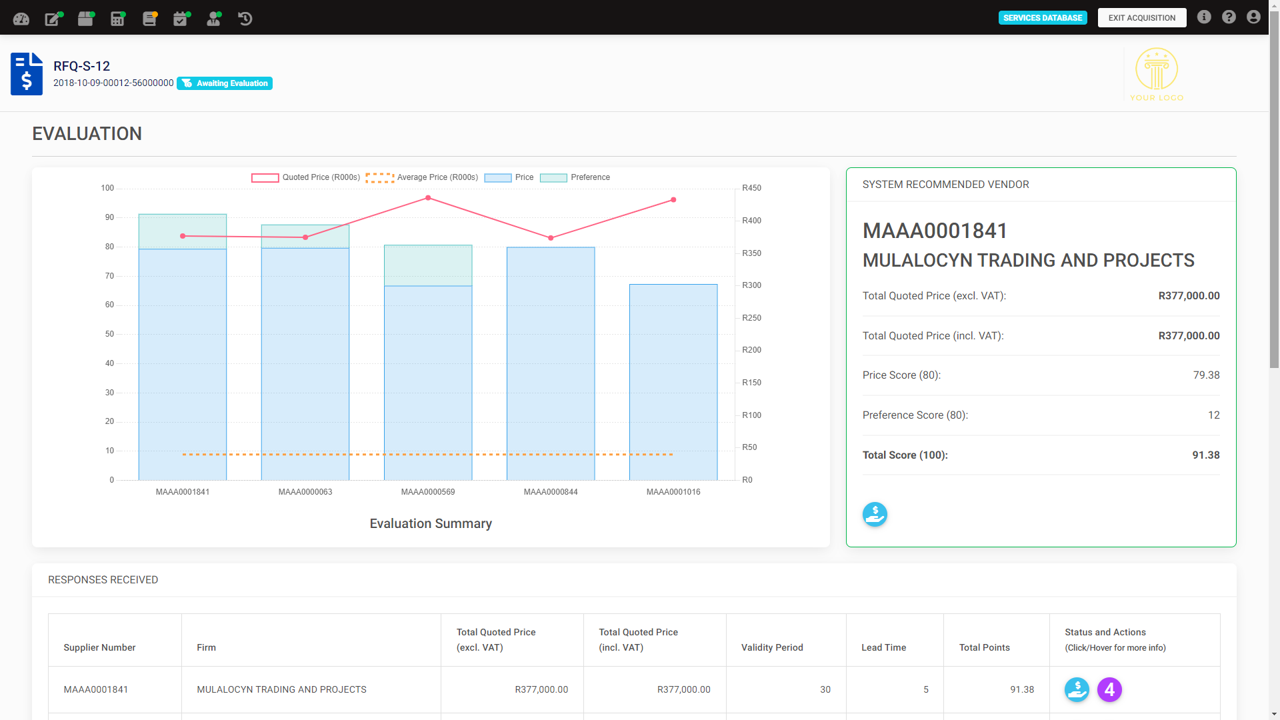
The evaluation considers the CSD statuses and Declarations of Interest (SBD documents), Relevant information when required (including Poor Performance), Item Spend Analysis based historical information providing indicative prices, System Recommendations and automatic generation of evaluation reports.
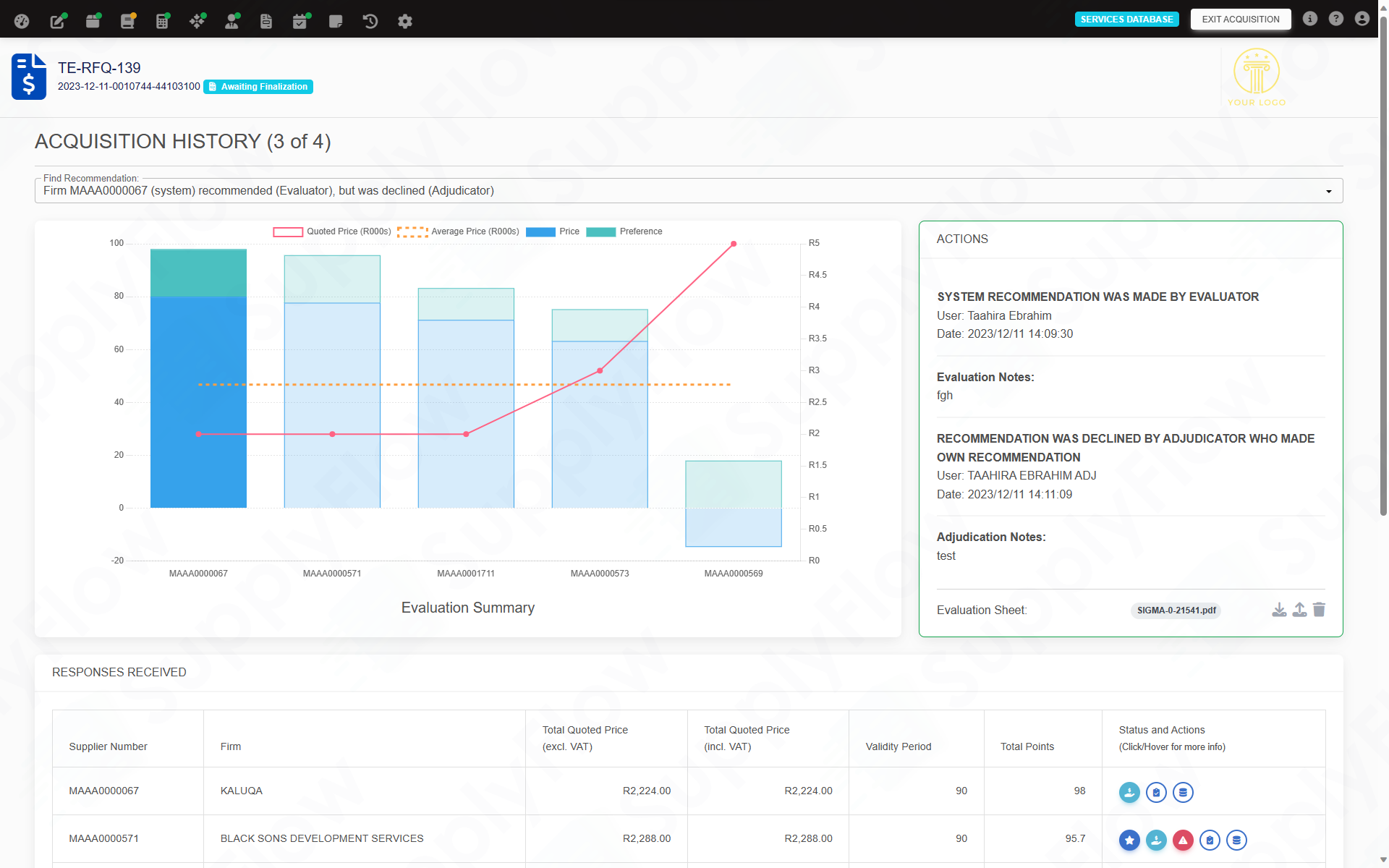
Bid Award with Delegations of Authority
The system allows for award of a bid based on configuration of approvals as required Typically, this will require an adjudication to take place to ensure that the process and procedure has been correctly followed in line with the requirements of per business prescripts (such as PFMA/MFMA). For any deviations, there may be an additional approval required. Only delegated users are authorised to perform the above actions based on the organogram of an organisation, which can be configured with delegation levels and values. The system automatically issues regret letters to unsuccessful bidders
Workflow
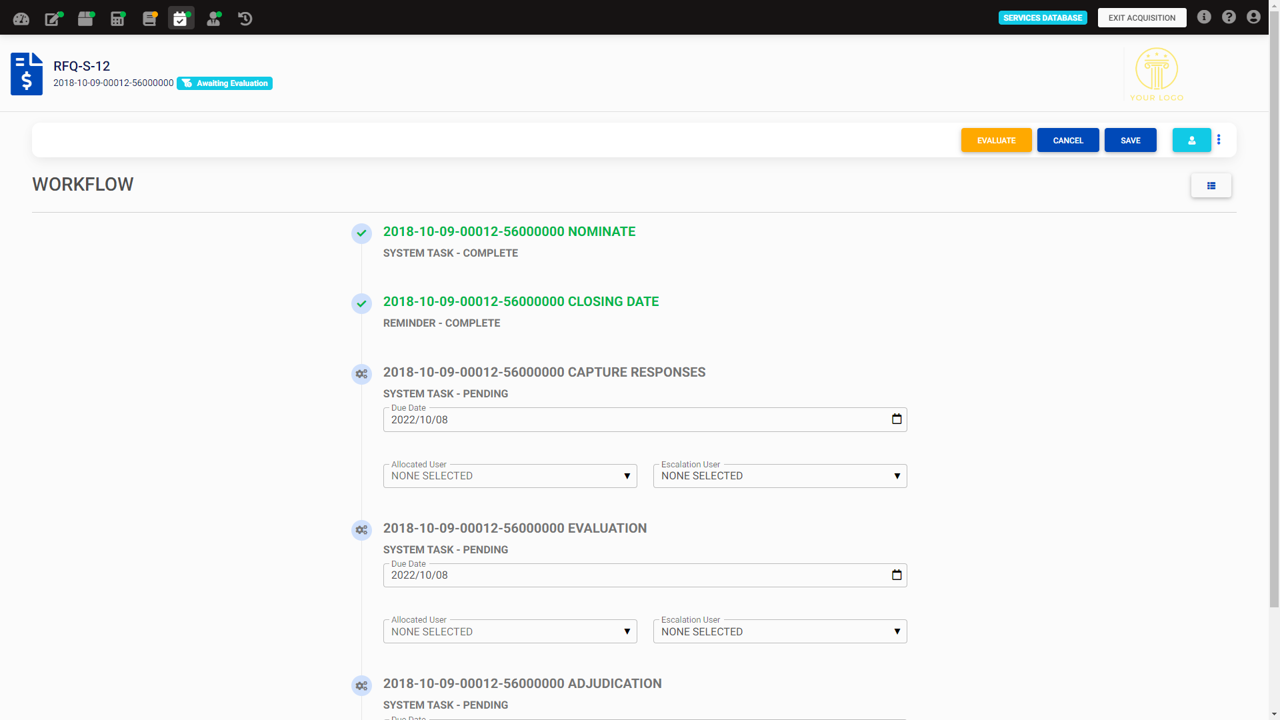
Control of tasks, deadlines, resource allocation and escalations for each acquisition. Allows for the automatic generation of procurement plans. The system automatically assigns status based on the task completed for easy tracking. Any acquisition can be cancelled and depending on the status, the impact is intelligently taken in to account.
Safeguarding of Acquisition Documents
With the Electronic Document Management Module provided, all documents relating to an acquisition, including bid specification document, responses received from vendors, evaluation sheets, etc.; can be uploaded and indexed against an acquisition, providing the safeguarding of acquisition documents.